
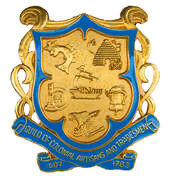
Behind the soldiers, politicians, and landowners of colonial America were the skilled hands of artisans and tradesmen who built homes, forged tools, crafted furniture, and wove fabrics. To recognize the role of these individuals in shaping early American society, the Guild of Colonial Artisans and Tradesmen, 1607–1783 was founded as a hereditary lineage society. Its purpose is to honor those whose craftsmanship sustained communities from the founding of Jamestown to the end of the American Revolution.
Origins of the Society
The Guild of Colonial Artisans and Tradesmen was established in 2004, when its founder Karen Avery Miller (Mrs. H. Clay Miller) identified a need in the hereditary community for an organization that focused on honoring colonial ancestral artisans. She shared her thoughts and plans with a group of friends gathered together to research at the LDS Family History Library and then the Guild of Colonial Artisans and Tradesmen 1607-1783 was formed.
The Guild was created to honor men and women who practiced skilled trades or crafts in the American colonies between 1607 (the settlement of Jamestown) and 1783 (the Treaty of Paris ending the Revolutionary War). The society recognizes that artisans were not only providers of essential goods but also leaders in communities, often contributing directly to the Revolutionary cause.
Purpose and Mission
The Guild’s objectives are:
- To commemorate colonial artisans and tradesmen whose work sustained the colonies;
- To document genealogical lines of descent from these artisans;
- To preserve historical knowledge about trades in colonial America, including apprenticeships, guild structures, and shop practices;
- To encourage research, education, and preservation projects related to colonial trades;
- To provide a community for descendants who share this heritage.
Membership Criteria
Membership is open to men and women who can prove direct descent from an artisan or tradesman who practiced in the American colonies during the specified period (1607–1783).
Qualifying ancestors include:
- Blacksmiths, coopers, carpenters, masons, and shipwrights;
- Weavers, tailors, cordwainers, milliners, and hatters;
- Silversmiths, pewterers, clockmakers, and printers;
- Other skilled tradesmen or craftswomen documented in colonial records.
Applicants must provide documentary evidence, such as:
- Wills, probate records, or tax rolls listing occupation;
- Apprenticeship contracts;
- Town or colony records indicating trade;
- Advertisements or notices from colonial newspapers.
Activities and Contributions
Like other hereditary societies, the Guild of Colonial Artisans and Tradesmen promotes both fellowship and preservation. Its contributions include:
- Publishing member ancestor registries and historical essays about trades;
- Participating in commemorative events at colonial sites
- Supporting museum programs that teach early American trades through living history;
- Encouraging younger generations to value craftsmanship, heritage, and history.
The Guild also connects members to broader discussions of how artisans influenced the economic and political development of America. Many artisans—especially printers and silversmiths—were key figures in spreading Revolutionary ideals.
Historical Context: Artisans in Colonial America
Colonial artisans were more than providers of goods—they were often community leaders. Examples include:
- Paul Revere, silversmith and engraver, whose craft and patriotism became legendary;
- Benjamin Franklin, who began as a printer before becoming a statesman;
- Countless unnamed blacksmiths, carpenters, and coopers, whose work was vital to the survival of colonial towns.
Artisans played key roles in fostering independence. Printers published revolutionary pamphlets; blacksmiths and gunsmiths supplied militias; tailors and weavers promoted homespun cloth in defiance of British imports.
Conclusion
The Guild of Colonial Artisans and Tradesmen, 1607–1783 highlights the vital role that skilled tradespeople played in shaping the colonies and fueling the Revolution. By preserving their stories, honoring their descendants, and supporting research and preservation, the Guild ensures that these essential figures—blacksmiths, printers, weavers, and countless others—are remembered as builders of a nation.
Sources
- Guild of Colonial Artisans and Tradesmen 1607-1783 – Official Website
- Colonial Williamsburg Foundation – Trades and Apprenticeships in Early America

 Lineage Society History
Leave a comment