
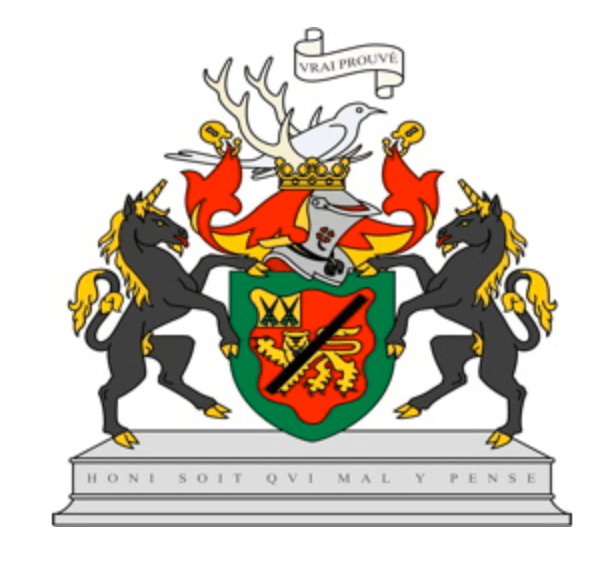
Among the many hereditary societies in the United States, few have a name as colorful—or as historically intriguing—as the Descendants of the Illegitimate Sons and Daughters of the Kings of Britain, also known as “The Royal Bastards.” Behind its tongue-in-cheek title lies a serious mission: preserving and documenting the history of royal offspring born outside of wedlock, whose bloodlines still thread through countless families across Britain, Europe, and America.
Origins of the Society
The society was founded in the 1950s by a group of genealogists, historians, and heritage enthusiasts who recognized that while much attention was paid to the legitimate heirs of monarchs, the illegitimate children of British kings also left a lasting impact. Many of these children, though barred from the throne, were granted titles, lands, or influential positions, and their descendants often married into prominent noble or gentry families.
The founders wanted to create a society that was equal parts genealogical challenge and historical commemoration. Since illegitimate royal children were often not recorded in official lines of succession, proving descent requires careful research into peerage histories, wills, parish records, and historical accounts.
Purpose and Mission
The Descendants of the Illegitimate Sons and Daughters of the Kings of Britain seeks to:
- Document and preserve the genealogical lines from recognized illegitimate children of British monarchs;
- Encourage historical research into the political, social, and economic influence of these children;
- Promote fellowship among descendants, regardless of the era or monarch from which they descend;
- Support publications and lectures on British royal history, with a special focus on the “off-record” branches of dynasties.
Defining “Illegitimate” in Historical Context
In the medieval and early modern periods, illegitimacy was a legal designation, not merely a social stigma. Many kings of England, Scotland, and later Great Britain openly acknowledged their illegitimate children, granting them noble titles or arranging advantageous marriages. Some famous examples include:
- Henry FitzRoy, 1st Duke of Richmond and Somerset – acknowledged son of King Henry VIII;
- James Scott, 1st Duke of Monmouth – acknowledged son of King Charles II;
- Charles Lennox, 1st Duke of Richmond – another acknowledged son of King Charles II;
- William Longespée, 3rd Earl of Salisbury – acknowledged son of King Henry II.
Because these children could not inherit the throne, they often became founders of important aristocratic houses whose lines have persisted for centuries.
Membership Criteria
To join, applicants must:
- Prove direct lineal descent from a child born out of wedlock to a British monarch, whose parentage was publicly acknowledged;
- Provide documentary evidence such as peerage entries, heraldic visitations, church records, wills, or other recognized historical sources;
- Complete an application reviewed by the society’s genealogist.
Membership is open to descendants of monarchs from William the Conqueror (1066) to Queen Victoria (1837–1901), provided the child in question was recognized by the Crown or contemporaneous records.
Activities and Outreach
The society maintains a roster of qualified royal offspring, publishes research articles in its member newsletter, and occasionally hosts gatherings at historic sites with royal connections. Members often participate in other heritage organizations, such as:
- The Order of the Crown of Charlemagne;
- The Society of the Cincinnati (if qualifying through other lines);
- Various colonial and early American lineage societies, where royal ancestry—legitimate or not—intersects with early settlement history.
The society’s playful name sometimes attracts attention, but its scholarly contributions to genealogy are taken seriously by researchers of royal and noble lineages.
Conclusion
While legitimate royal lines were tasked with wearing the crown, illegitimate royal offspring often wielded influence in different but equally enduring ways—through landholding, noble titles, military leadership, and dynastic marriages.
The Descendants of the Illegitimate Sons and Daughters of the Kings of Britain keeps these stories alive, proving that the legacy of a king can extend far beyond the official line of succession—and sometimes, the most fascinating family histories come from the branches that grew just outside the crown’s shadow.
Sources
- Descendants of the Illegitimate Sons and Daughters of the Kings of Britain – Official Website
- Given-Wilson, Chris, and Alice Curteis. The Royal Bastards of Medieval England. London: Routledge & Kegan Paul, 1984.


 Lineage Society History
Leave a comment