
Among the many American lineage societies dedicated to preserving the early chapters of U.S. history, few focus as specifically on the complex relationships between Native Americans and European settlers as the Continental Society Daughters of Indian Wars (CSDIW). Founded to honor women descended from colonial leaders and soldiers who played roles in America’s early Indian conflicts, the CSDIW offers a unique perspective on a formative and often turbulent era in North American history.
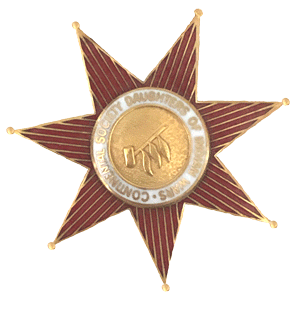
Origins and Formation
The Continental Society Daughters of Indian Wars was officially founded in 1988 by a group of historically minded women who sought to create a lineage society focused on those who were directly involved in the various Indian wars that occurred in the American colonies prior to 1900.
The founding members recognized the significance of preserving the legacy of their ancestors, many of whom served as soldiers, colonial officials, or settlers during key periods of frontier conflict—from King Philip’s War and Pontiac’s Rebellion to the Northwest Indian War, Seminole Wars, and beyond.
The Society was incorporated in the United States as a nonprofit organization and now has members across the country organized into state chapters. The national headquarters is located in Oklahoma City, Oklahoma, a fitting geographic center considering the society’s scope across both Eastern and Western frontier history.
Purpose and Mission
The CSDIW has a clear and scholarly mission:
“To honor and perpetuate the memory of our ancestors who served in conflicts with Native American tribes, to collect and preserve records, and to promote education about early American Indian wars.”
The society’s goals include:
- Preserving colonial, territorial, and early American records relating to Indian wars.
- Educating the public about the Indian wars and their impact on American history.
- Encouraging patriotism through historical commemoration.
- Promoting fellowship among descendants of colonial and early American veterans.
- Supporting scholarships and historical preservation projects related to early American and Native American history.
While the society honors military service and leadership during these conflicts, it approaches history with a sense of scholarly respect for the full context, including the role and suffering of Native peoples during westward expansion and colonial warfare.
Membership and Eligibility
Membership in the Continental Society Daughters of Indian Wars is by invitation, and applicants must:
- Be women aged 18 or older, and
- Prove lineal descent from an ancestor who:
- Served in a military or civil capacity in any colony or territory of what is now the United States,
- Participated in an Indian war, and
- Served prior to 1900.
Qualifying ancestors may include:
- Colonial soldiers from wars such as King Philip’s War (1675–1678), Queen Anne’s War, or the French and Indian War.
- Early U.S. Army personnel who fought in conflicts such as the Creek Wars, Black Hawk War, or Seminole Wars.
- Territorial officials and pioneers involved in frontier defense or treaty negotiations.
For a full listing of acceptable service, click here. Applicants must provide documentary proof of both lineage and the ancestor’s qualifying service using accepted genealogical standards.
Activities and Outreach
The Continental Society Daughters of Indian Wars engages in a range of historical, civic, and charitable activities:
- Hosting annual assemblies and regional chapter meetings with historical presentations.
- Supporting research projects, historic site preservation, and archival donations.
- Awarding scholarships to students studying Native American history, colonial studies, or American history.
- Placing memorial markers at sites of battles, forts, and cemeteries connected to Indian wars.
- Supporting libraries and museums, particularly those focusing on early American and Native American history.
The Society encourages a respectful understanding of the complexity of colonial and early American Indian relations, striving to honor the historical truth while preserving the legacy of its members’ ancestors.
Historical Context: What Were the Indian Wars?
The term “Indian wars” refers to a series of armed conflicts between Native American tribes and European settlers or the U.S. government that spanned from the 17th to the late 19th century. These conflicts were shaped by:
- Land disputes and westward expansion,
- Cultural and religious differences,
- Treaty violations and territorial reassignments,
- Shifting alliances during imperial wars (especially between the British, French, and Spanish powers).
Major conflicts recognized by the Society include:
- Pequot War (1636–1638)
- King Philip’s War (1675–1678)
- French and Indian War (1754–1763)
- Cherokee-American Wars (1776–1794)
- Tecumseh’s War and the War of 1812
- Seminole Wars (1816–1858)
- Sioux Uprisings and Plains Wars (1860s–1880s)
These wars played a decisive role in shaping the early American frontier and the geopolitical future of North America.
Conclusion
The Continental Society Daughters of Indian Wars offers a singular way to honor the complex history of early America by preserving the stories of those who served during the nation’s earliest frontier conflicts. With a commitment to research, education, and historical remembrance, the Society keeps alive a vital chapter of U.S. history—one that shaped the relationships, geography, and governance of the modern United States.
If your ancestry leads back to early colonial militias, frontier scouts, or military officers who served in these storied conflicts, membership in the CSDIW may offer a powerful connection to both your family legacy and the larger story of early America.
Sources
- Continental Society Daughters of Indian Wars – Official Website
- King Philip’s War: The History and Legacy of America’s Forgotten Conflict – Eric B. Schultz and Michael J. Tougias. Countryman Press, 1999.
- Utley, Robert M. The Indian Frontier of the American West, 1846–1890. University of New Mexico Press, 1984.
- Calloway, Colin G. The American Revolution in Indian Country: Crisis and Diversity in Native American Communities. Cambridge University Press, 1995.

 Lineage Society History
Leave a comment